Featured Article
From Alert to Action: An Energy Response Playbook for Busy Teams
Turn energy alerts into a repeatable response process with clear ownership, data checks, triage, escalation, and evidence-based closure.
Read Article
Expert strategies, guides, and analysis for Canadian commercial and industrial businesses looking to reduce energy costs and improve operational efficiency.
Turn energy alerts into a repeatable response process with clear ownership, data checks, triage, escalation, and evidence-based closure.
Read Article
Practical guides and strategies for Canadian commercial and industrial energy management.

Create a defensible commercial energy budget for 2027 using reconciled consumption, tariff assumptions, demand scenarios, and separately tracked savings projects.

Prepare commercial buildings for winter with a focused review of heating, schedules, loading docks, data, and responsibilities before the first sustained cold period.
Turn energy alerts into a repeatable response process with clear ownership, data checks, triage, escalation, and evidence-based closure.

Prepare commercial HVAC for shoulder-season operation by reviewing sensors, schedules, overrides, economizers, and competing heating and cooling calls.

Build a practical savings record with a defined baseline, measurement boundary, operating adjustments, and a transparent calculation after a schedule or controls change.

Plan commercial EV charging around building demand, departure times, electrical capacity, and tariff rules. Includes an illustrative managed-charging calculation.

Separate weather, occupancy, billing days, and operational changes when reviewing energy performance. Learn where degree-day comparisons help and where they fail.
Check meter identity, billing dates, units, duplicate records, and estimated readings before using utility data for forecasts or savings decisions.

Use a weekend load review to find avoidable after-hours consumption, separate essential loads, and verify schedule changes with a simple worked example.

Investigate summer cooling costs with a practical checklist for schedules, rooftop equipment, comfort, and demand. Includes a worked scheduling example.

Industrial energy costs can represent 20–40% of operating expenses. This guide covers proven strategies for reducing electricity and natural gas costs across manufacturing and heavy industrial operations.

Controlling who sees what in your energy management system isn't just an IT concern—it's a compliance, security, and operational efficiency issue.

Your energy analytics are only as good as your data. This guide compares the three main collection methods and helps you choose the right approach.

Green building certifications validate your energy performance and signal sustainability leadership to tenants, investors, and regulators. Compare Canada's top programs.

Net metering allows Canadian businesses with solar installations to sell excess electricity back to the grid. Learn how the program works by province and whether it makes financial sense.

Hospitals and clinics operate 24/7 with critical systems that can't be interrupted. Here's how healthcare facilities manage energy while maintaining patient safety and regulatory compliance.

Accurate energy forecasts help businesses budget with confidence, plan operations smarter, and avoid costly demand spikes. Here's how predictive analytics makes it possible.

Energy costs are among the most volatile line items in a commercial budget. Learn how forecasting and cost simulation tools let businesses plan more accurately and model rate changes before they happen.

Natural gas is a significant operating expense for many Canadian commercial facilities. This guide covers pricing structures, efficiency strategies, and how to track and reduce gas consumption.

Vague targets don't drive results. Learn how to set specific, measurable, and achievable energy reduction goals that align with your operations and ESG commitments.

Energy management used to mean desktop dashboards and quarterly reports. Mobile-first platforms are changing what's possible for operational teams in the field.

The right energy KPIs turn raw consumption data into actionable intelligence. Learn which metrics matter most, how to calculate them, and how to act on what they reveal.

Canada offers a range of federal and provincial programs that help businesses fund energy efficiency upgrades, equipment retrofits, and renewable energy installations.

In leased spaces, energy management is complicated by split incentives. This guide clarifies who controls what and how landlords and tenants can work together to reduce energy costs.

Electricity costs vary dramatically across Canada—from 7¢/kWh in Quebec to over 15¢/kWh in Nova Scotia. This guide breaks down what commercial businesses pay in each province.

Compressed air systems are among the least efficient in industrial facilities—often wasting 20–30% of input energy. Here's how to find and fix the biggest losses.

Artificial intelligence is moving from buzzword to real operational tool in commercial energy management. Understand what's actually possible today and how to evaluate AI-powered platforms.

Energy management works best as a team effort. Learn what roles are needed, how responsibilities should be distributed, and which tools support effective collaboration.

HVAC systems account for 40–60% of energy use in commercial buildings. These data-driven optimization strategies can cut HVAC energy costs significantly without sacrificing comfort.

Energy data doesn't speak for itself—you need to translate it into business language. This guide shows how to structure energy reports that resonate with leadership and drive action.

The federal carbon price affects commercial and industrial energy costs across Canada. Learn how it's structured, who pays it, and how to reduce your carbon tax exposure.

Hotels consume energy 24/7 across dozens of systems. These proven management strategies help hospitality operators reduce utility costs while maintaining guest comfort standards.

Understanding GHG emission scopes is foundational to any credible sustainability program. This guide demystifies Scope 1, 2, and 3 for Canadian commercial and industrial operators.

TOU pricing rewards businesses that shift electricity use to off-peak hours. Learn how to identify load-shifting opportunities, model your savings, and build an operational TOU strategy.

Without benchmarking, you're flying blind. Learn how to compare your building's energy performance against baselines and similar properties to prioritize improvements effectively.

Warehouses and distribution centres face unique energy challenges. These targeted strategies address the highest-consumption systems and deliver measurable cost reductions.
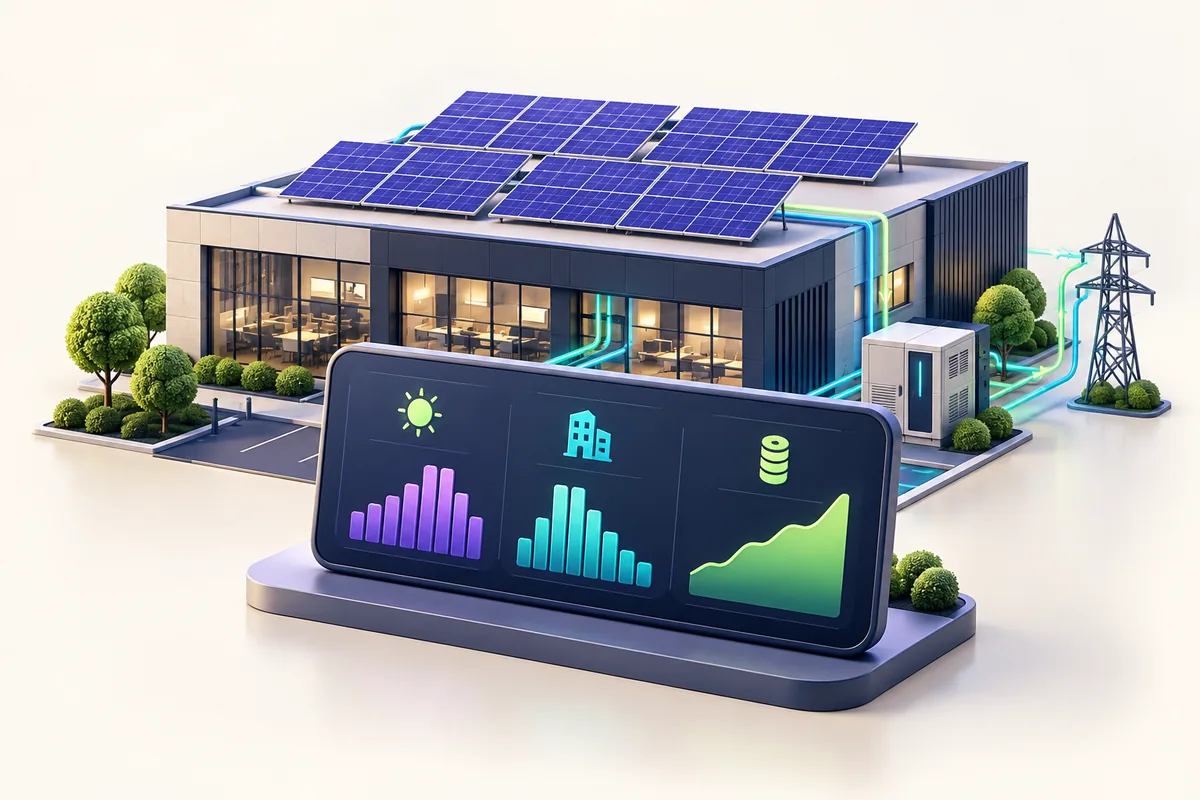
Adding solar to your commercial building fundamentally changes how you manage energy. Learn how to track generation, optimize self-consumption, and integrate solar into your energy strategy.

Time-of-use pricing rewards businesses that shift energy-intensive activities to off-peak hours. Learn how to identify shifting opportunities and calculate the savings potential.

A commercial energy audit systematically identifies where and how energy is wasted. This guide walks through every stage—from pre-audit preparation to post-audit implementation.

Carbon disclosure requirements are evolving rapidly. This guide explains what Canadian businesses need to report, to whom, and how energy management data supports compliance.

Canadian demand response programs offer industrial users financial incentives to reduce load during peak grid periods. Learn how to qualify, participate, and maximize the value.

Multi-property energy management requires more than aggregated data. Learn how to establish consistent benchmarks, centralize visibility, and drive performance across your entire portfolio.

Restaurants use 5–7 times more energy per square foot than other commercial buildings. This playbook covers kitchen equipment, refrigeration, HVAC, and monitoring to reduce food service energy costs.

ESG energy disclosures are becoming mandatory for many Canadian businesses. This guide covers what frameworks apply, what data you need, and how to prepare your organization.

Demand charges can represent 30–50% of a commercial electricity bill—and most businesses don't manage them at all. Here's how to understand and reduce your peak demand charges.

What's the actual return on investing in energy management? This article breaks down payback periods, cost avoidance calculations, and real-world ROI examples from Canadian businesses.
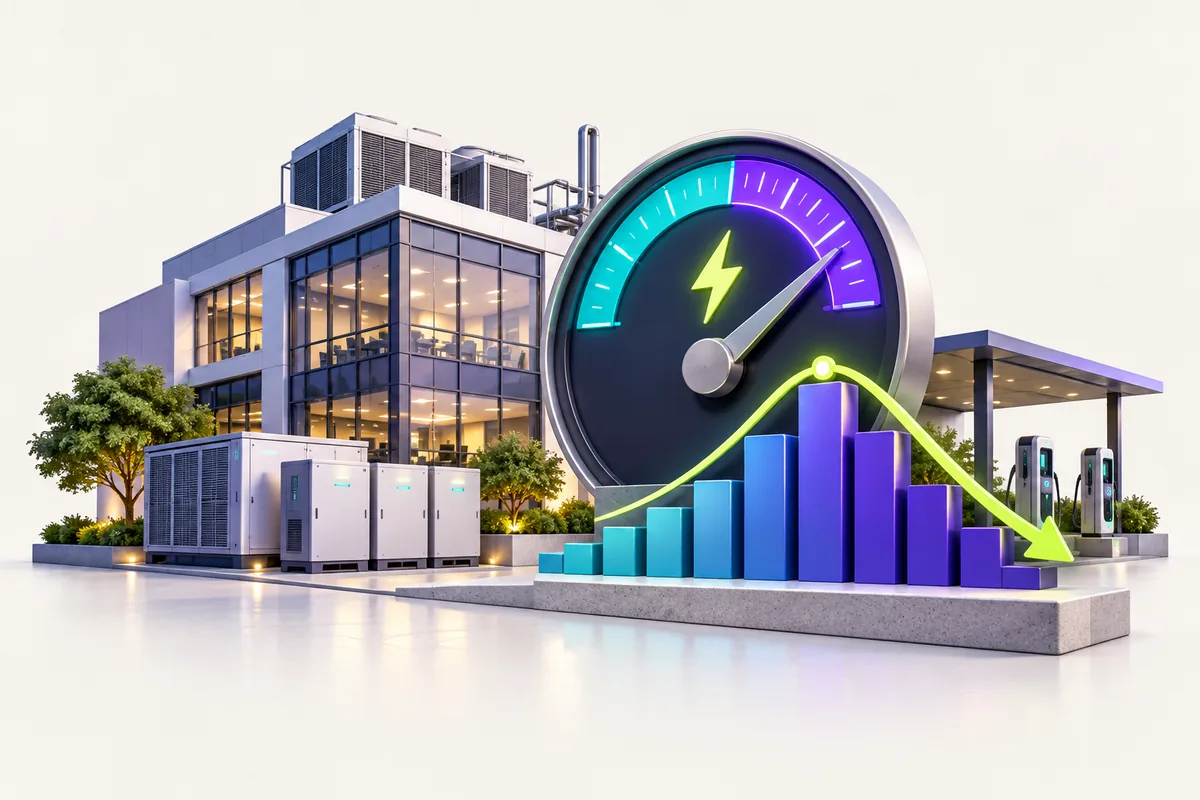
Demand charges can constitute 30–50% of a commercial electricity bill, yet many businesses don't fully understand how they're calculated or how to minimize them.

Ontario's electricity pricing structures can be confusing. This guide explains how time-of-use, tiered, and ultra-low overnight pricing work—and how to choose the right structure for your business.

Commercial electricity costs in Canada have risen steadily. These 10 proven strategies help businesses take control of their bills through smarter operations, scheduling, and monitoring.

An effective energy management plan turns ambitions into action. This step-by-step guide walks through baseline assessment, target setting, action planning, and progress tracking.

Smart buildings promise automated energy optimization—but the reality is more nuanced. Learn what smart building technology actually delivers and how to get the most from it.

Manufacturing facilities are among Canada's largest energy consumers. This comprehensive guide covers motors, compressed air, lighting, and process heating strategies for significant cost reductions.

Rising energy costs squeeze retail margins. These smart management strategies help Canadian retailers reduce consumption through better scheduling, lighting controls, and real-time monitoring.

Most businesses pay their utility bills without truly understanding the charges. A proper bill analysis can reveal savings opportunities hidden in plain sight.

Real-time monitoring transforms energy management from reactive to proactive. Learn how live consumption data helps Canadian businesses catch problems early and reduce waste at the source.

Energy is one of the largest controllable expenses for commercial operations. This guide covers every strategy from zero-capital quick wins to long-term infrastructure investments.

An EMS centralizes energy data collection, analysis, and reporting. Learn how these systems work, what features matter most, and how to evaluate the right platform for your organization.

Anomalies in energy consumption signal equipment failures, leaks, or inefficiencies. Learn how automated detection helps businesses act before costs spiral.

Office buildings waste significant energy through poor scheduling, inefficient lighting, and outdated HVAC systems. These 10 strategies target the highest-impact areas for measurable savings.

Energy management is the systematic approach to controlling and optimizing energy consumption in your organization. This complete guide covers everything Canadian businesses need to know to get started.

Canada's commercial energy landscape is shifting fast in 2026. From AI-driven analytics to carbon pricing escalation and grid modernization, here are the key trends every facility manager needs to know.
Track every bill, get alerts before costs rise and let Wiz, your AI energy coach, point out the savings across all your properties.
